
What 180–220 GSM Cotton Really Means — And Why It’s the Most Important Number When Buying the Best Cotton T-Shirt in India
Table of Contents
I used to buy t-shirts by price. A ₹299 tee looked fine in the photo, arrived thin as paper, and went see-through after three washes. I kept making the same mistake because nobody told me what to actually look for.
Then I started paying attention to one number: GSM.
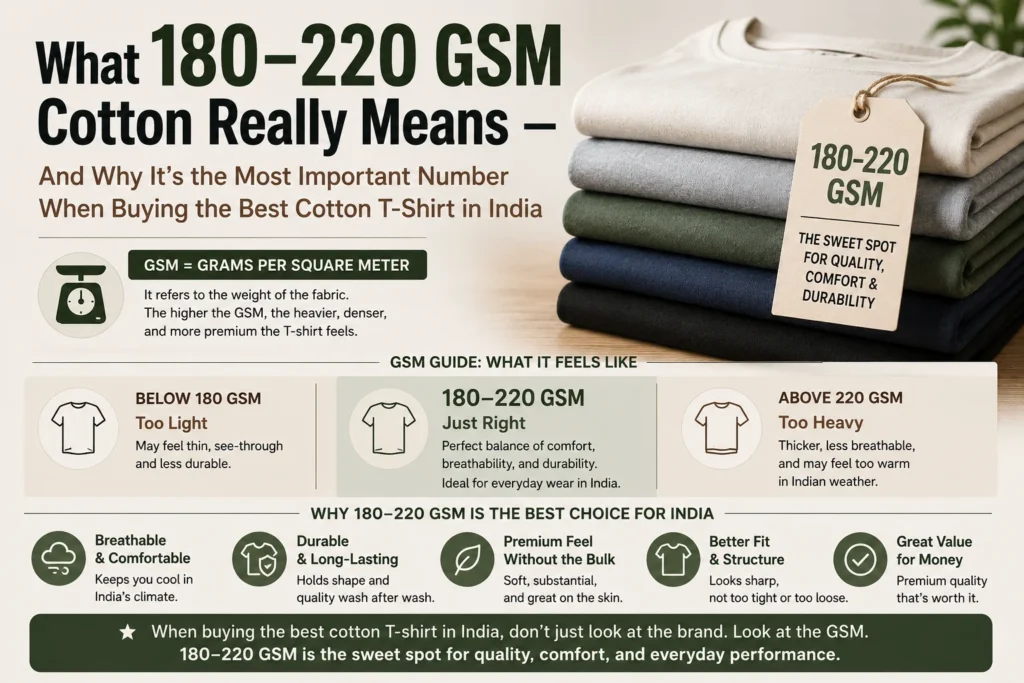
That three-letter term — Grams per Square Metre — is the single most useful filter when you’re shopping for the best cotton t-shirt quality in India. Once you understand what 180 GSM vs 220 GSM means for your daily wear, you’ll never go back to buying blind.
This guide breaks it all down. And at the end, I’ll show you exactly why Matrikano’s Hindu mythology t-shirts sit right in the sweet spot — and what that means for you as a buyer.
What Is GSM in a T-Shirt and Why Does It Matter?
GSM stands for Grams per Square Metre. It measures how much a one-metre-square piece of fabric weighs. The higher the number, the denser and heavier the fabric.
Think of it like this: a thin bedsheet and a thick bath towel are both cotton. But they feel completely different because their GSM is different. The same logic applies to your t-shirt.
For everyday cotton t-shirts in India, the useful range is roughly 140 GSM to 240 GSM. Below 160 GSM, the fabric starts feeling flimsy and transparent. Above 230 GSM, it becomes stiff and uncomfortable in warm weather. The 180–220 GSM range is where the best balance lives — substantial enough to hold its shape, light enough to breathe.
This is the range serious premium cotton t-shirt brands in India aim for. And it’s the range that separates a t-shirt you’ll wear for two years from one you’ll throw out in two months.
Combed Cotton vs Ringspun Cotton — What’s the Difference?
GSM tells you how heavy the fabric is. But the type of cotton tells you how good it feels.
Two terms you’ll see on quality labels are combed cotton and ringspun cotton. They’re not the same thing, and they matter.
Combed cotton is made by running raw cotton fibres through fine combs before spinning. This process removes short fibres and impurities, leaving only the long, smooth strands. The result is a fabric that’s softer, stronger, and less likely to pill (those annoying little balls that form on cheap t-shirts after washing).
Ringspun cotton refers to the spinning method. Instead of just twisting fibres together loosely, ringspun yarn is continuously twisted and thinned to produce a tighter, more uniform thread. This makes the final fabric stronger and gives it a slightly smoother surface — which matters a lot when you’re printing detailed graphics or artwork on the t-shirt.
Combed ringspun cotton combines both processes. It’s the gold standard for premium printed t-shirts in India. The fabric is softer to the touch, holds colour better, and survives repeated washing far more gracefully than standard open-end spun cotton.
When you’re buying a t-shirt with a bold graphic or intricate design — like the kind you’d find on Matrikano’s mythology collection — combed or ringspun cotton isn’t a luxury. It’s a requirement. A detailed print on rough, inconsistent fabric looks cheap and fades fast.
The 180 GSM Sweet Spot — Lightweight Without Being Thin
180 GSM combed cotton is the most popular weight for daily wear t-shirts in India — and for good reason.
At this weight, the fabric is light enough to stay comfortable through a warm afternoon but dense enough that it won’t cling awkwardly or become transparent when wet. It drapes well on most body types, doesn’t feel bulky, and layers easily under jackets or shirts.
For summer t-shirts, casual everyday wear, and travel, 180 GSM is often the right call. It’s the fabric weight you want when you’re thinking comfort-first.
One important detail: a 180 GSM t-shirt should still be pre-shrunk or bio-washed to avoid the dreaded first-wash shrink. Good Indian t-shirt brands run their fabric through a bio-wash process that softens the cotton, removes excess dye, and pre-shrinks the fibres so the size you buy is roughly the size you keep.
According to the Textile Exchange Global Preferred Fibers Report, pre-treated cotton significantly reduces post-purchase shrinkage — one of the top complaints among Indian online shoppers for apparel.
Why 220 GSM Is the Better Choice for Premium Graphic T-Shirts
If 180 GSM is for everyday comfort, 220 GSM ringspun cotton is for people who want their t-shirt to feel like a considered purchase.
At 220 GSM, the fabric has more body. It holds its structure throughout the day — no sagging at the collar, no losing shape after the first wash. When you put it on, it feels substantial. Not heavy, but present.
This weight is particularly well-suited for graphic t-shirts with detailed prints. The denser fabric surface gives screen-printed or DTG-printed designs a crisper base, which means the artwork looks sharper and the colours stay vibrant longer.
This is why Matrikano uses fabric in the 180–220 GSM range for their Hindu mythology-themed cotton t-shirts. When your artwork is as detailed as a Mahabharata warrior or a Nataraja pose, the fabric has to be worthy of it. A premium design on a cheap, thin tee isn’t a premium product — it’s a disappointment in a packet.
For anyone buying a quality graphic t-shirt in India that they actually want to wear for years, not just seasons, 200–220 GSM is the weight to look for.
Also read on Matrikano: How We Choose the Art for Every Mythology T-Shirt — the story behind the designs.
Bio-Wash, Pre-Shrunk, and Colorfastness — The Three Finishing Tests
GSM and cotton type get you most of the way to a good t-shirt. But three finishing details separate a truly high-quality cotton t-shirt from a mediocre one.
Bio-wash is an enzyme-based finishing process that gives cotton a softer, slightly worn-in feel from the very first wear. It removes surface fuzz, reduces pilling, and gives the fabric a cleaner look. A bio-washed t-shirt doesn’t feel scratchy or stiff — it feels like you’ve already broken it in.
Pre-shrinking means the fabric has been washed and treated before cutting so that the finished garment won’t dramatically shrink in your first home wash. Without this, a Medium can become a Small after one hot cycle. Serious t-shirt brands in India pre-shrink their fabric as standard — it’s a sign of quality control.
Colorfastness refers to how well the dye holds up over time. A t-shirt that fades to a pale ghost of its original colour after ten washes is a quality failure, regardless of how it felt new. Look for brands that specify reactive dyeing or pigment dyeing with wash-fast certification. The Bureau of Indian Standards (BIS) has defined colorfastness ratings for Indian textile products — a useful benchmark if you’re comparing fabrics technically.
At Matrikano, every t-shirt in the Hindu mythology collection goes through bio-wash treatment, uses pre-shrunk cotton, and is printed with inks tested for wash durability. The goal is a t-shirt that looks as good on wash fifty as it did on day one.
How to Read a T-Shirt Label Before You Buy
Most Indian buyers never look at the label. That’s exactly why so many end up disappointed.
Here’s a simple reading guide for the next time you’re evaluating a cotton t-shirt online in India:
| Label Term | What It Means | Good Sign? |
|---|---|---|
| 100% combed cotton | All combed fibres, no polyester blending | Yes — premium feel |
| 180 GSM | Medium weight; good for daily casual wear | Yes |
| 200–220 GSM | Heavier; better for structured fit and graphic prints | Yes — especially for art tees |
| Ringspun | Stronger, smoother yarn construction | Yes |
| Bio-washed | Enzyme-finished; softer and pre-treated | Yes |
| Pre-shrunk | Won’t shrink dramatically after first wash | Yes |
| Open-end spun | Coarser, rougher yarn | Usually no for premium |
| Cotton/polyester blend | Cheaper feel; may not breathe as well | Depends on ratio |
| No GSM listed | Brand hiding the fabric weight | Red flag |
If a brand doesn’t mention GSM anywhere on their product page, that silence is usually telling you something.
Related on Matrikano: Why Our T-Shirts Are Designed for People Who Actually Know Their Mythology — prints, fabric, and the thinking behind them.
Who Should Be Buying 180–220 GSM Cotton T-Shirts in India?
Anyone who wants a t-shirt that lasts, honestly. But more specifically:
If you wear t-shirts daily — 180 GSM combed cotton is your fabric. Light, breathable, holds shape, survives regular machine washing.
If you want a graphic or art t-shirt — go to 200–220 GSM ringspun or combed ringspun. The print will look better and last longer.
If you’re gifting a t-shirt — GSM is your trust signal. A 220 GSM bio-washed tee in a premium mythology print (like the ones at Matrikano) lands completely differently from a 150 GSM fast-fashion piece. The weight alone tells the recipient this was a considered choice.
If you’re tired of replacing cheap t-shirts every few months — the math on a higher-quality 200 GSM tee that lasts three years versus buying a ₹299 tee twice a year will eventually make you a fabric snob. That’s fine. Being informed is not snobbery.
Frequently Asked Questions About Cotton T-Shirt Quality in India
What GSM is best for everyday cotton t-shirts in India?
For everyday casual wear in India’s climate, 180–200 GSM combed cotton is the ideal range. It’s light enough to stay comfortable in warm weather but dense enough to avoid the flimsy, see-through problem that plagues cheaper 140–160 GSM fabrics. If you plan to print a graphic on the t-shirt, lean toward 200–220 GSM for a better print surface.
What is the difference between combed and ringspun cotton in t-shirts?
Combed cotton removes short fibres before spinning, producing a smoother, softer, more pill-resistant fabric. Ringspun cotton uses a tighter spinning technique that creates a stronger, finer yarn. Combed ringspun cotton combines both methods and is considered the best cotton type for premium t-shirts — it’s softer, stronger, and holds printed designs better than standard cotton.
Does GSM affect how a t-shirt print looks?
Yes, significantly. A denser fabric (200–220 GSM) provides a smoother, more even surface for screen printing or DTG printing. This means colours look richer, fine details are crisper, and the ink bonds more evenly. Printing on a thin, low-GSM fabric often results in uneven coverage, bleed, and faster fading of the design.
What does bio-wash mean in a cotton t-shirt?
Bio-wash is an enzyme-based finishing process applied to cotton fabric before cutting and stitching. It softens the fabric, removes surface lint and fuzz, reduces pilling, and gives the t-shirt a slightly worn-in feel from the first wear. A bio-washed t-shirt also has more consistent colour and a cleaner surface appearance than untreated cotton.
How do I know if a t-shirt will shrink after washing?
Look for “pre-shrunk” on the product label or description. Pre-shrunk cotton has been washed and treated during manufacturing to remove most of the shrinkage before the garment is cut. If a brand doesn’t mention pre-shrinking, assume the t-shirt will shrink slightly (sometimes significantly) on the first hot wash. Always wash your first few times in cold water regardless.
Is 100% cotton better than a cotton-polyester blend for t-shirts?
For comfort and breathability in India’s climate, 100% combed or ringspun cotton generally wins. Pure cotton absorbs sweat, breathes well, and feels more natural against the skin. Cotton-polyester blends resist wrinkles and dry faster, but they can feel warmer and less breathable. For printed t-shirts, a high-cotton blend (at least 90%) is recommended for a better print finish.
Where can I find the best quality cotton t-shirts with mythology designs in India?
Matrikano makes Hindu mythology graphic t-shirts on 180–220 GSM combed cotton with bio-wash treatment. Each design is artwork-grade — not clip-art slapped on a tee — and the fabric is chosen specifically to support detailed printing. It’s a good starting point if you want a t-shirt that’s both genuinely well-made and culturally meaningful.
The Short Version — What to Remember Next Time You Buy
You don’t need to become a fabric expert. You just need to know three things:
GSM between 180 and 220 is the range where good t-shirts live. Below that, you’re buying thin. Above 230, you’re getting stiff.
Combed or ringspun cotton means the fabric was made with care. It’s softer, stronger, and better for print quality.
Bio-wash and pre-shrunk mean the brand thought about what happens after you buy — not just before.
When I started filtering for these three things, the number of disappointing t-shirts I bought dropped to almost zero. The best cotton t-shirt quality in India isn’t hard to find once you know what you’re looking for. You just have to look.
And if you want a t-shirt that ticks all three boxes and carries a design rooted in Indian mythology — something worth actually keeping — Matrikano’s collection is a genuine place to start.
Explore the full range of mythology-inspired cotton t-shirts at Matrikano — made on fabric that earns the design.