
Rajasthani Culture on a T-Shirt: The Banna Banni Story — and Why This Is the Most Meaningful Tee You’ll Ever Wear
Rajasthani Banna Banni you may have hear this name once if you are a rajasthani. There’s a song that plays at almost every Rajasthani wedding. You might not know its name. But if you’ve ever sat in a courtyard in Jodhpur or Jaisalmer as the women gathered, you’ve heard it — high-pitched, joyful, a little teasing, completely alive.
It’s called Banna Banni.
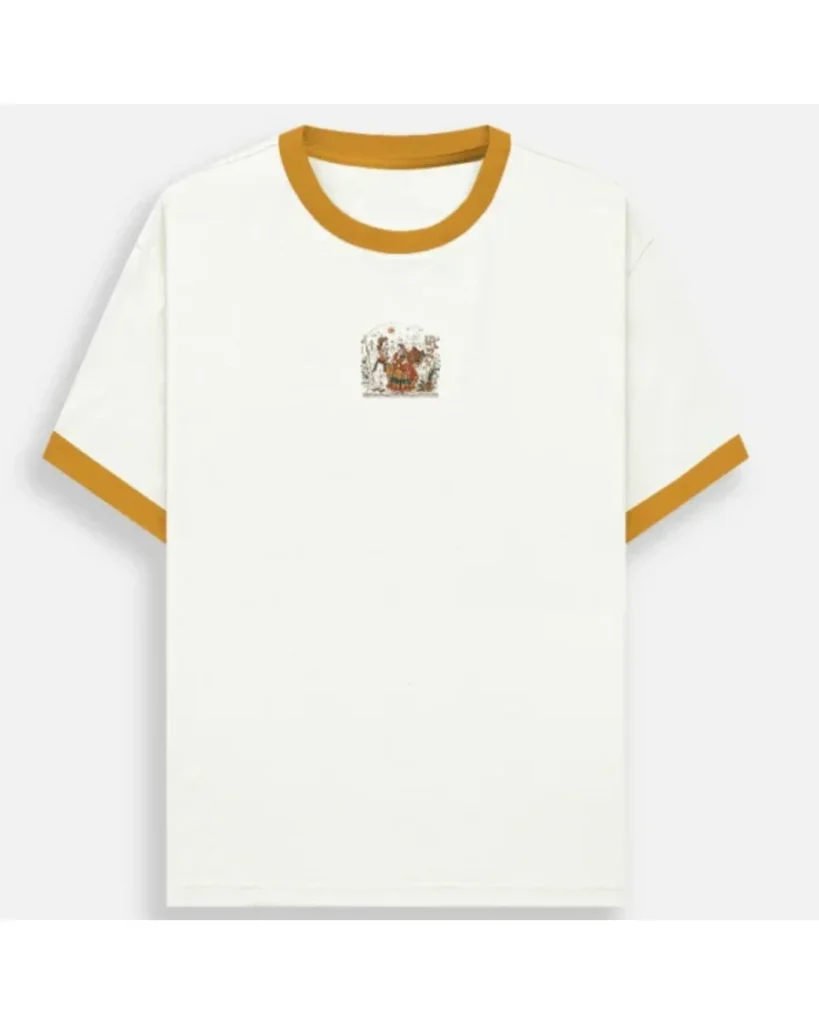
Banna Banni T-Shirt | Embroidery Ringer Tee
Celebrate the spirit of Rajasthan with the Banna Banni Embroidery Ringer T-Shirt by Matrikano. Featuring a detailed traditional Rajasthani wedding motif embroidered on the chest, this vintage-inspired ringer tee pairs mustard contrast ribbed collar and sleeves with a clean off-white body — a modern streetwear tribute to desi roots. Crafted from 100% bio-washed cotton (180 GSM) in a relaxed unisex fit, it’s as comfortable as it is culturally rich.
✅ 100% Cotton | 180 GSM | Bio-Washed | Unisex Relaxed Fit | Embroidered Chest Art
Banna means the groom. Banni means the bride. And the songs sung in their name — sometimes sweet, sometimes sharp, always honest — are one of the oldest living folk traditions in Rajasthan. They are not background music. They are the women of the family speaking directly to the couple, to the occasion, to the meaning of what’s happening.
When Matrikano decided to put Rajasthani culture on a t-shirt, this is where the conversation started — not with a pattern or a colour, but with a story that has been passed down by voice for centuries.
This blog is that story.
What Is Banna Banni — The Folk Tradition Most Indians Don’t Know Well Enough
Banna Banni is a genre of Rajasthani folk songs sung during wedding ceremonies, specifically in the days leading up to and during the wedding itself. The word banna (sometimes spelled bana) refers to the groom — the decorated, nervous, soon-to-be-married young man. Banni refers to the bride.
The songs are typically sung by women — mothers, aunts, sisters, neighbours — in call-and-response style, often accompanied by the dholak (a hand drum) and the thali (a metal plate struck rhythmically). They happen during the haldi ceremony, the mehendi night, and the pre-wedding rituals that gather the women of two families before the formal ceremony begins.
What makes Banna Banni songs remarkable is their tone. They are not reverent hymns. They are playful, pointed, and deeply personal. The women tease the groom about his horse, his mustache, his borrowed confidence. They comfort the bride. They talk about leaving home. They celebrate, grieve, joke, and bless — sometimes all in the same verse.
This is Rajasthan as it actually lives: not just in forts and miniature paintings, but in the voices of women at a wedding who are keeping something ancient going.
According to cultural documentation by the Sangeet Natak Akademi — India’s national academy for music, dance, and drama — regional folk song traditions like Banna Banni are classified as intangible cultural heritage, representing living oral traditions that are passed informally from generation to generation and are at risk of being lost as urbanization accelerates.
Why Rajasthani Folk Culture Deserves More Than a Camel Silhouette
Here’s the honest problem with how Rajasthan is usually represented on clothing and merchandise: it’s always the same five images.
The camel. The palace. The turban. The mehendi hand. The Hawa Mahal.
These are real and beautiful things. But they are also the most surface-level version of a culture that goes far deeper — a culture with its own philosophy, its own music forms, its own oral literature, its own way of marking the most important moments in human life.
Banna Banni isn’t a decoration. It’s a living practice.
When Matrikano designs a t-shirt around Rajasthani culture, the question asked is not what does Rajasthan look like? The question is what does Rajasthan feel like from the inside? What do people who grew up in it carry with them?
For millions of Rajasthanis — and for the enormous diaspora of Marwari and Rajasthani families spread across India and the world — Banna Banni is not folklore. It’s a memory. It’s a grandmother’s voice. It’s a specific afternoon in a courtyard that smelled of marigolds and mustard oil.
A Rajasthani Banna Banni t-shirt that captures that feeling isn’t merchandise. It’s recognition.
Also read on Matrikano:
The Design Language of a Banna Banni T-Shirt
So how do you put a folk song on a t-shirt?
You don’t illustrate the lyrics. You capture the world they come from.
The visual language of Banna Banni draws from Rajasthani phad painting — a scrollwork narrative art form used by the Bhopa community of Rajasthan to tell stories through detailed, stylized figures. It also draws from the ghoomar dance posture (the signature spinning movement of Rajasthani women’s folk dance), the geometry of bandhani textile patterns (tie-dye), and the iconography of the leheriya wave — the striped pattern that appears on Rajasthani wedding fabrics.
These aren’t random decorations. Every visual element in a well-designed Rajasthani culture t-shirt is doing the work of cultural reference — saying this is from somewhere specific, and that somewhere is worth knowing.
What you end up with is a graphic tee that carries a story most people will ask about. And that’s exactly the point. A Banna Banni t-shirt should make someone across the room say: what is that? — and give you something worth telling them.
At Matrikano, every regional design goes through cultural research before it goes through design software. The folk tradition is understood first. Then the art follows.
Banna Banni and the Larger World of Rajasthani Folk Music
Banna Banni doesn’t exist in isolation. It’s part of a rich ecosystem of Rajasthani folk music traditions that includes:
Maand — the classical-adjacent vocal tradition of the royal courts of Rajasthan, characterized by its long, ornamented notes and slow meditative pace. Songs like Kesariya Balam are among the most famous examples.
Panihari — songs sung by women while drawing water from wells, describing the journey, the wait, and the longing embedded in that daily act.
Pabuji ki Phad — an epic oral narrative tradition about the folk deity Pabuji, performed by the Bhopa community using the large phad scroll painting as a visual backdrop.
Ghoomar songs — performed during the ghoomar dance at weddings and festivals, tied directly to the circular, skirt-swirling movement the dance is named for.
All of these traditions share something: they were carried by ordinary people — women at wells, families at weddings, wandering storytellers — not by institutions. They survived because people kept singing them, kept telling them, kept insisting they were worth passing on.
The Rajasthan State Archives and academic researchers like Dr. Komal Kothari — one of India’s foremost ethnomusicologists — have spent decades documenting these traditions precisely because their survival cannot be taken for granted.
A Rajasthani folk culture t-shirt from Matrikano sits within this wider conversation. It is, in a small but genuine way, part of the chain of people who said: this is worth keeping visible.
Matrikano picks
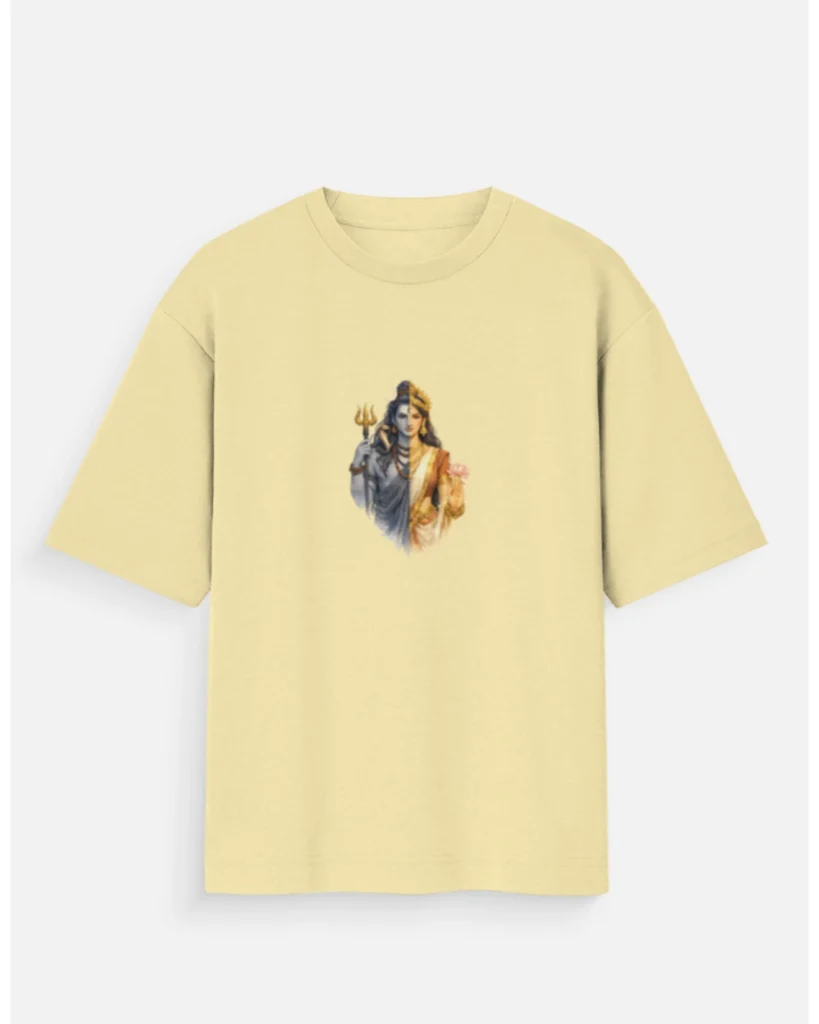
Ardhnarishwar T-Shirt
Original price was: ₹1,399.00.₹999.00Current price is: ₹999.00.Banna Banni T-Shirt | Embroidery Ringer Tee
Original price was: ₹3,599.00.₹2,999.00Current price is: ₹2,999.00.
Haldighati T-Shirt
₹1,299.00Hanuman T-Shirt
Original price was: ₹1,899.00.₹1,199.00Current price is: ₹1,199.00.


Who Wears a Banna Banni T-Shirt — and What It Says About Them
Not everyone will recognize a Banna Banni design immediately. That’s fine. The people who do will feel something specific — and the people who don’t will be curious enough to ask.
This t-shirt is for:
Rajasthanis living outside Rajasthan — in Mumbai, Bangalore, Delhi, Dubai, or anywhere else the Marwari diaspora has spread. A Banna Banni tee is a quiet signal: I know where I’m from. I carry it with me.
People who are tired of generic Indian heritage clothing — the kind that puts a half-understood Sanskrit word or a vague mandala on a tee and calls it culture. A Banna Banni design is specific. It names something real.
Couples getting married or celebrating a Rajasthani wedding — a Banna Banni t-shirt as a pre-wedding gift, for the mehendi squad, or for wedding guests is a detail that will be noticed and remembered.
Lovers of Indian folk art and regional craft traditions — people who follow phad painters, collect bandhani dupattas, or just believe that India’s regional cultures deserve more than passing acknowledgment.
Anyone who wants a conversation starter — because wearing something this specific, this rooted, and this beautifully made will always invite a question. And the answer is a story worth telling.
Related on Matrikano:
Matrikano Banna Banni vs. Generic Rajasthani Merchandise
| Feature | Matrikano Banna Banni T-Shirt | Generic “Rajasthan” Merchandise |
|---|---|---|
| Cultural basis | Specific folk tradition (Banna Banni wedding songs) | Generic camel/fort/palace imagery |
| Design research | Cultural + artistic research before design | Stock art or surface pattern |
| Visual language | Phad art, bandhani geometry, ghoomar posture | Generic “ethnic” motifs |
| Fabric quality | 180–220 GSM combed cotton, bio-washed | Varies; often unspecified |
| Meaning for the wearer | Specific cultural recognition and story | Decorative souvenir |
| Who resonates with it | Rajasthanis, folk art lovers, curious buyers | Tourists, casual buyers |
| Print durability | Wash-tested, colourfast inks | Often fades within months |
| Conversation value | High — people ask about it | Low — most people have seen it |
The difference isn’t just aesthetic. It’s the difference between a t-shirt that represents culture and one that merely resembles it.
Frequently Asked Questions About Rajasthani Banna Banni T-Shirts
What is Banna Banni in Rajasthani culture?
Banna Banni refers to a category of traditional Rajasthani folk songs sung at weddings — banna meaning the groom and banni meaning the bride. These songs are performed by women during pre-wedding ceremonies like haldi and mehendi, often in call-and-response style accompanied by the dholak. They are playful, emotional, and deeply rooted in the oral tradition of Rajasthani communities.
What makes a Rajasthani Banna Banni t-shirt different from regular Rajasthani-themed clothing?
Most Rajasthani-themed clothing uses generic imagery — camels, forts, or surface-level ethnic patterns. A Rajasthani Banna Banni t-shirt is designed around a specific cultural tradition with its own history, visual language, and emotional meaning. The design draws from phad painting styles, bandhani textile geometry, and the iconography of folk weddings — making it something a Rajasthani will recognize and feel, not just see.

Is the Banna Banni tradition still alive in Rajasthan today?
Yes, though its reach has changed. In rural Rajasthan and among families that maintain traditional wedding customs, Banna Banni songs are still sung at weddings. In urban areas, the tradition is less common but experiences revival through folk music festivals, cultural NGOs, and artists who record and perform these songs. Platforms like the Sangeet Natak Akademi and independent ethnomusicologists have been documenting the tradition to support its preservation.
Who would appreciate a Rajasthani culture t-shirt as a gift?
Anyone with a connection to Rajasthan — whether by birth, family, or deep appreciation of Indian folk culture — would find this meaningful. It works especially well as a gift for weddings, homecomings, festivals, or for members of the Rajasthani or Marwari diaspora who want to carry something culturally specific. The design is specific enough to feel personal, not generic.
What fabric does Matrikano use for cultural graphic t-shirts like this?
Matrikano uses 180–220 GSM combed cotton with bio-wash treatment for their graphic t-shirts. This fabric range is specifically chosen to support detailed printing — the kind of fine linework that a folk art-inspired design requires — while remaining comfortable for everyday wear. For a full breakdown of what these fabric specs mean, read our guide to 180–220 GSM cotton quality.
Can a Banna Banni t-shirt be worn as everyday clothing or only for events?
Absolutely as everyday wear. The design is cultural and artistic — not ceremonial. Wearing a Rajasthani folk culture t-shirt to work, to college, or on a casual day out is exactly the kind of quiet cultural pride the design is meant for. It starts conversations, represents a tradition, and looks distinctive — all without requiring any particular occasion.
Where can I buy a Rajasthani Banna Banni t-shirt in India?
Matrikano is currently one of the very few brands creating culturally researched, story-backed regional t-shirts in India — including designs rooted in Rajasthani folk tradition. Their collection is available online and ships across India.
A Song Worn, Not Just Sung
The thing about Banna Banni is that it was never meant to be preserved in a museum. It was meant to be sung — loudly, slightly off-key, in the middle of a wedding courtyard at midnight, by women who knew all the words because they had been learning them since childhood.
Putting that tradition on a Rajasthani culture t-shirt is a small act of the same impulse: keep it visible, keep it moving, keep it in the world.
A Matrikano Banna Banni tee is not a souvenir. It’s not a costume. It’s a piece of regional Indian identity made wearable — designed for the people who know what the tradition means, and for the people who are about to find out.
Because the best Rajasthani Banna Banni t-shirt doesn’t just look like Rajasthan. It tells you something you didn’t know, and makes you want to know more.
Explore Matrikano’s full collection of culturally-rooted Indian graphic t-shirts — including regional, mythology, and folk art designs — at matrikano.com.