
Indian Youth and the Search for Real Identity
Indian Youth and the Search for Real Identity
There’s a quiet war happening inside most young Indians today. No one talks about it directly, but you’ve felt it — at a family function where you feel out of place, or scrolling through reels at 1 AM wondering why nothing feels real anymore.
On one side: a 5,000-year-old civilization with stories, symbols, and values baked into your DNA. On the other: a globalized world that tells you your roots are outdated, and cool means looking like someone from a Netflix show filmed in New York.
That tension? That’s the identity crisis of Indian youth. And it’s bigger than most people admit.
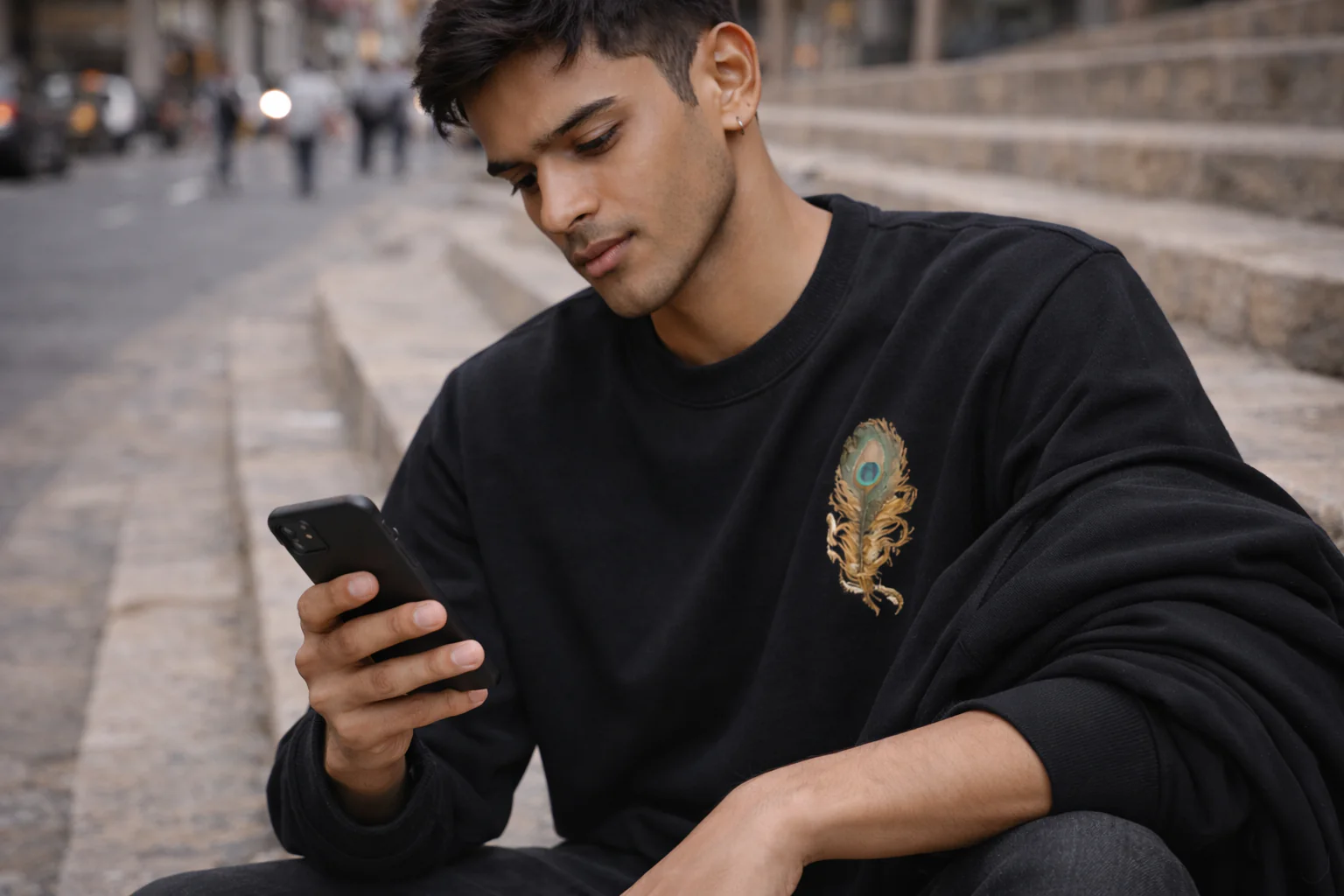
The “In-Between” Generation
India’s Gen Z didn’t grow up in one world. They grew up in two — simultaneously.
You could be doing a morning puja with your parents and then spending the afternoon watching American YouTube creators talk about “hustle culture.” You could wear a Tommy Hilfiger hoodie to a festival and feel totally normal about it. You could eat dal chawal for lunch and chase it with a Starbucks cold brew.
Researchers have started calling this the “patchwork identity” — a self made up of different cultural fragments stitched together into something entirely new. It sounds fascinating from the outside. From the inside, it can feel exhausting.
The problem isn’t that Indian youth love global culture. The problem is that many of them have absorbed Western identity wholesale while their own cultural identity was dismissed as “old-fashioned” or “uncool.” And now, somewhere around their early twenties, the question hits hard: Who actually am I?
What’s Actually Driving the Disconnect
It didn’t happen overnight. There were a few quiet forces at work.
Social media rewired the reference point. When your daily visual diet is 90% international content, your unconscious benchmark for “aspirational” becomes foreign. The algorithm didn’t hate Indian culture — it just wasn’t showing enough of it.
The education system didn’t help. Schools teach you dates and battles. They rarely teach you why your mythology matters, what the philosophy behind your festivals actually means, or why certain regional traditions exist. You get the shell but not the meaning.
Western cool had better branding. Honestly. Nike, Supreme, Marvel — they all understood that identity is something you wear, listen to, and carry. Indian culture had the depth but not the packaging. At least, not until recently.
The Hunger for Something Real
Here’s what’s interesting though: the same generation that grew up chasing Western aesthetics is now the one leading the cultural comeback.
Young Indians are returning to Sanskrit, rediscovering folk art, learning about their regional mythologies, wearing tees that carry symbols from stories their grandparents told. It’s not nostalgia — it’s something sharper than that. It’s a deliberate reclamation.
They’ve seen what pure Westernization looks like. Many feel it doesn’t fully fit. And they’re choosing to build something of their own — a hybrid identity that doesn’t ask them to erase where they come from.
This is actually a healthy evolution, not a crisis. But it requires one thing that most institutions never gave them: a confident, modern way to express Indian identity.
Also Read : Best Indian Brand for Mythology T Shirts
Why Clothes Became the Battleground
Of all the ways identity expresses itself, clothing is the most visible and most immediate.
What you wear is a daily decision. It’s public. It signals tribe, taste, and values before you say a single word. For Indian youth navigating this identity tug-of-war, fashion became an arena where both worlds collide.
For a long time, “looking Indian” in casual settings felt like a compromise. Kurtas were for family events. Western brands were for “going out.” The cultural and the contemporary were kept in separate wardrobes.
That binary is breaking down — and fast.
The rise of Indian streetwear brands drawing from mythology, folk art, regional heritage, and cultural storytelling is giving young Indians something they’ve needed for a long time: a way to look modern and deeply Indian at the same time.
Not in a costume way. Not in a “dressing up for cultural events” way. In a this is just who I am, every day way.
The Symbols We Stopped Paying Attention To
Ask most young Indians what Trishul means, and they’ll say “Shiva’s weapon.” But press a little deeper — what does it represent philosophically? What does Kali’s tongue out actually symbolize in Tantric tradition? What’s the story behind Arjuna’s doubt in the Bhagavad Gita, and why is it arguably the most relevant psychological dilemma facing modern youth today?
The symbols were always there. The meaning just got lost somewhere between exam prep and Instagram.
When a brand puts a Bhairav illustration on a tee and explains who Bhairav is — the fierce, boundary-dissolving form of Shiva, the deity of transformation — suddenly that tee isn’t just graphic design. It’s a conversation. It’s an invitation to look inward.
That’s what real cultural identity does. It doesn’t just sit on the surface. It makes you ask questions about yourself.
The Real Flex Is Knowing Where You Come From
There’s a growing shift in what “cool” means for Indian Gen Z.
The old version of cool was mimicry — wear what the West wears, talk how global influencers talk, detach from anything that seemed “too Indian.” That era is quietly ending.
The new version of cool is self-knowledge. Knowing your mythology. Wearing symbols that have roots. Being able to explain why the trimurti matters or what your region’s folk tradition actually says about the world. That’s a flex. A real one.
This isn’t about being anti-Western either. Indian Gen Z is too global, too connected, too curious for that kind of reductive thinking. It’s about adding a layer — the layer that was missing.
Knowing global culture and your own? That’s not a contradiction. That’s power.
Regional Pride Is the Next Frontier
One thing most conversations about Indian identity miss is just how diverse that identity is. “Indian culture” isn’t one thing.
It’s the Yaksha traditions of Rajasthan. The Gond art of Madhya Pradesh. The Chhau masks of Jharkhand. The folk ballads of Punjab. The Theyyam of Kerala. Each of these traditions carries its own cosmology, its own visual language, its own understanding of the human experience.
Young Indians from these regions are beginning to realize that their local identity is not lesser than some pan-Indian or global one. In fact, the more specific and rooted it is, the more powerful and distinct it becomes.
Regional mythology, regional folk art, regional stories — these are not provincial. They’re unexplored. And in a world drowning in sameness, specific is the new universal.
A Generation Designing Its Own Mirror
The search for identity was never going to end in a textbook or a philosophy class. It was always going to be expressed — through music, through language, through art, through what you choose to put on your body in the morning.
Indian youth are designing their own mirror right now. Piece by piece. Story by story. Symbol by symbol.
And the brands, artists, and creators who understand that — who offer them real cultural depth, not just aesthetic surface — those are the ones this generation will carry forward.
Because deep down, every young Indian knows: there’s something here. Something that goes way back, way deeper than trends, way bigger than one generation’s identity crisis.
They just want someone to hand them a language for it.
Matrikano is building that language — one design, one story, one symbol at a time.