
Why Indian-Owned Fashion Brands Matter
Why Indian-Owned Fashion Brands Matter: Supporting Local Artisans and Living Culture
Here’s a question most of us never stop to ask when we tap “buy now”: Where did this actually come from? Who made it? What happened to them after they made it?
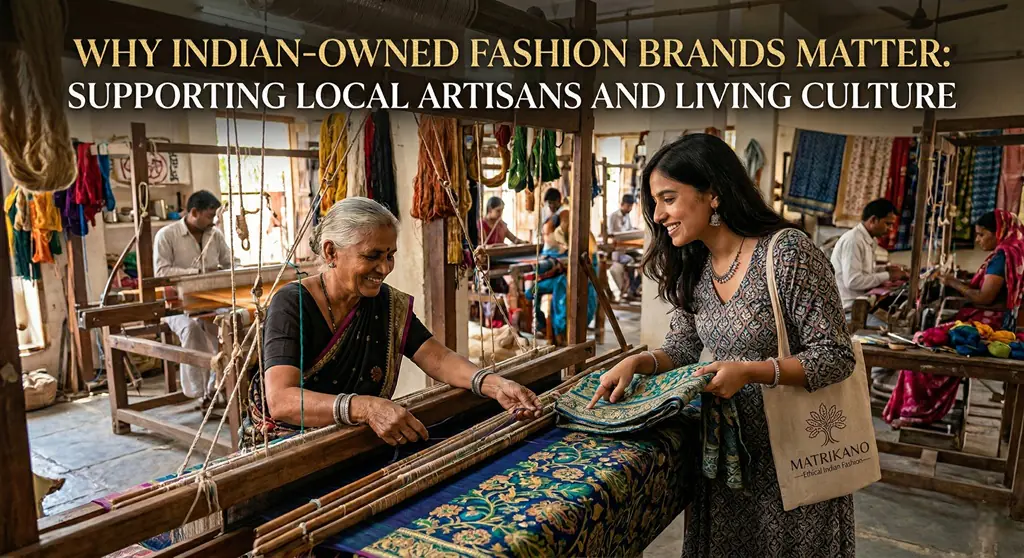
For most fast fashion purchases, the answer is uncomfortable. But when you buy from an Indian-owned brand rooted in craft and culture — the answer is a story worth knowing.
India’s Artisan Crisis Nobody Talks About Enough
India has one of the richest artisanal traditions on the planet. Block printing from Rajasthan. Kantha embroidery from Bengal. Kalamkari from Andhra Pradesh. Bandhani from Gujarat. Phad scroll art. Warli paintings. Thathera brasswork. The list goes on — literally for thousands of years.
These aren’t just “crafts.” They’re living knowledge systems. Skills passed down through generations, refined over centuries, carrying within them entire worldviews, community identities, and visual philosophies.
And yet — many of the artisans who carry these skills today are struggling. Globalization and mass production have systematically marginalized them. Factory-made imitations flood the market at prices handmade work can never compete with. The kaarigars — the craftspeople — are often pushed out of their own tradition’s economy.
That’s the quiet crisis behind every suspiciously cheap “ethnic print” tee you scroll past on a fast fashion app.
What Actually Changes When You Buy Indian-Owned
Let’s get specific, because this matters more than a generic “support local” slogan.
When you buy from an Indian brand that works directly with artisans:
- Money stays in the ecosystem. It goes to the designer, the craftsperson, their family, their village — not to a multinational’s quarterly earnings report.
- Skills survive. Artisan crafts only live as long as there’s demand for them. Every purchase is a vote that says this skill is worth keeping alive.
- Fair wages become possible. Brands that work directly with artisan communities — without layers of middlemen — can actually pay fair prices for the labor.
- Creative dignity is preserved. The best Indian artisan brands give craftspeople creative input, not just production quotas. That’s the difference between exploitation and collaboration.
Brands like Rangsutra work with rural artisans and are community-owned — meaning the artisans themselves hold stakes in the brand. Okhai works with over 30,000 artisans across India, focusing specifically on rural women, reviving craft traditions while building real economic independence. Johargram, founded by a NIFT graduate, is built entirely around the indigenous crafts of Jharkhand, giving those traditions a modern platform they’ve never had before.
These aren’t charity projects. They’re real businesses, building real cultural value.
The Hidden Cost of Buying From the Wrong Place
When a global fast fashion brand releases an “India-inspired” collection — using block print aesthetics, paisley motifs, or deity imagery — and manufactures it overseas at scale, several things happen simultaneously:
The visual language of Indian craft gets diluted into a trend. The artisans whose ancestors developed that visual language see zero economic benefit. Indian designers trying to build authentic brands compete against a corporation with infinite resources. And the consumer walks away thinking they’ve engaged with “Indian culture” when they’ve actually engaged with a copy of a copy.
That’s not an argument against ever buying non-Indian brands. It’s an argument for being conscious about when and why you choose what you choose.
Why Indian Streetwear Brands Carry Extra Weight
Streetwear, specifically, is an interesting arena for this conversation. Because streetwear has always been about identity — about wearing what you believe, what you represent, where you come from.
When an Indian streetwear brand draws from mythology, folk art, or regional cultural heritage, it’s not just making product. It’s doing something that global brands structurally cannot do: speaking from inside the culture.
A designer from Jaipur drawing on Rajasthani folk deity traditions for their tee design brings something no Brooklyn studio can replicate — lived cultural fluency. The understanding of why a particular symbol is used in a particular way. The instinct for what’s sacred and what’s shareable. The connection to the community whose story is being told.
That depth shows up in the work. And it’s worth paying for.
What “Homegrown” Really Means
The word gets used loosely. Not every brand that says “homegrown” or “made in India” is genuinely artisan-supporting or culturally rooted. Here’s how to tell the difference:
Signs of a genuinely artisan-rooted brand:
- They name and credit the craftspeople or communities they work with
- They explain the craft tradition behind their techniques
- They’re transparent about their supply chain and production process
- Their pricing reflects the real cost of handmade work — not suspiciously cheap
- The design language is specific and rooted, not generic “ethnic aesthetic”
Red flags:
- Vague “inspired by Indian culture” language with no specifics
- Mass production volumes that couldn’t possibly involve handcraft
- No mention of who makes their products or where
- Pricing that makes genuine artisan wages mathematically impossible
The Indian fashion space has both — genuinely transformative brands and brands that use cultural aesthetics as marketing skin. Knowing the difference is part of shopping with intention.
Regional Crafts Are Disappearing — Fashion Can Save Them
Here’s something that deserves more urgent attention: several Indian craft traditions are on the verge of extinction. Not because they’re not beautiful — but because the artisans can’t make a living from them anymore.
The Thathera brasswork community of Jandiala Guru in Punjab — the first Indian craft inscribed in UNESCO’s Intangible Cultural Heritage list — was on the brink of dying out before brands like P-Tal began reviving it commercially. Entire weaving communities in Jharkhand, Odisha, and the Northeast have watched younger generations leave the craft because there’s simply no market for it.
Fashion — specifically streetwear and contemporary clothing — has the reach and the audience to change that equation. When a craft tradition finds its way onto a tee that a 22-year-old in Bengaluru wants to wear, that tradition gets a future.
It’s one of the genuinely exciting things about the current moment in Indian fashion: the aesthetic hunger of young India and the survival needs of artisan communities are pointing at exactly the same solution.
The Jaipur Angle: A City Sitting on a Gold Mine
If you’re from Rajasthan, you already know this. Jaipur is arguably the craft capital of India. Block printing. Blue pottery. Leheriya tie-dye. Bandhani. Gota patti embroidery. Miniature painting. Phad scroll art.
The irony is that some of the most globally admired Indian craft traditions come from right here — and yet most young people in the city walk past them every day without a second thought. Meanwhile, foreign tourists pay premium prices for the same work in boutique stores.
Indian-owned brands that draw on Rajasthani craft traditions and put them on contemporary product — tees, streetwear, accessories — are doing something powerful: they’re making local youth want what’s already around them. They’re creating local pride through good design.
That’s not a small thing. That’s cultural preservation with style.
How to Actually Support Indian-Owned Brands
You don’t need to overhaul your entire wardrobe overnight. Small, consistent choices build real impact:
- Research before you buy — spend two minutes finding out if the brand is genuinely Indian-owned and artisan-connected before choosing a product
- Pay the real price — handmade, culturally rooted work costs more than factory output, and that’s correct, not a ripoff
- Share the story — when you wear something from an artisan-rooted brand, tell people why. That’s how brands with meaning grow
- Follow and engage — algorithm visibility matters enormously for small Indian brands; a like, share, or comment costs you nothing and means a lot
- Choose specificity over aesthetics — pick brands that know their craft tradition, not just ones that look Indian
The Bigger Picture
Every time you choose an Indian-owned brand that works with living craft traditions, you’re doing something that policy, subsidy, and NGO programs have struggled to do at scale: you’re creating genuine market demand for Indian cultural value.
That demand tells a young artisan in rural Rajasthan that their skill is worth something. It tells a designer building a mythology-inspired streetwear brand that their cultural knowledge is commercially viable. It tells the global fashion industry that Indian aesthetics don’t need to be filtered through a Western lens to be desirable.
None of that happens through a government scheme. It happens through millions of individual purchase decisions made by people who stopped to ask: where did this come from, and does the story behind it deserve my money?
When the answer is yes — and you can genuinely say yes — that’s not just shopping. That’s culture keeping itself alive.
Matrikano is a mythology and culture-inspired streetwear brand from India — designed with intent, rooted in story, built from the inside out.